When I started this blog, it was for my work going through a diploma in personalized learning with specialties in information technology communication and teaching ELL. Never did I imagine I would be using it while I homeschooled my kids through a pandemic, but here we are.
A little about us: I’m a first year teacher with a disorder called DCD. I’m a single mom of I two amazing kiddos. Addie is in grade 1 and is the most helpful, kind, and hilarious child. She is inquisitive and always wants to learn more. Liam is in kindergarten. He is sweet, sensitive and curious. He also has a neuroatypical brain. It makes him unique and look at the world in a very different way.
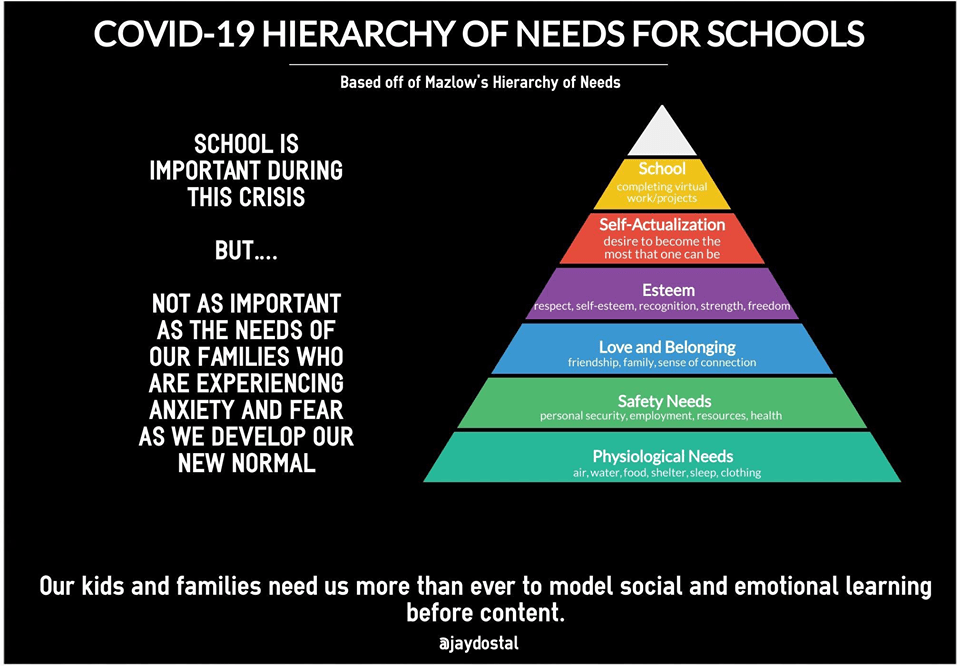
This is our third week of learning from home and I’m starting to feel like I maybe am beginning to figure out a routine. Keep in mind, I’m a trained teacher who is just starting to figure this out for my family. It’s taken me weeks to get a grasp on this and on my mental health. I’m also not working, so I can focus on my kids education solely. Life is exhausting just homeschooling without a break! My hat goes off to all of you out there juggling everything right now. You are being asked to do the impossible. I have 5 years of University training on education and its challenging to be mom and teacher. Just do the best that you can! Focusing on creating positive relationships with your kids and making this a time of safety and connectedness is way more important than their assignments.
I’ll post our learning schedule in the coming days. I’m a teacher who strongly believes in Inquiry based learning, so my home based learning reflects my kids interests and passions and tends to be a very flexible style. Our learning schedule is generally very flexible, because flexibility is what works for us.
Wishing you all health, and the best of luck in the coming weeks/months,
I was incredibly fortunate to work with the wonderful Shelby Conner (@shelbyp1116) https://thirdgradetheatrics.edublogs.org/ to develop this unit plan. Our focus was to create a unit that builds bridges between two classes in the same school district. We use Padlet to facilitate a ongoing dialogue on how students can create a solution about a common problem.
In our age of technology it it so important that we are teaching our students how to be leaders online. Not to just passively engage with content and other people, and especially not to turn a blind eye to bullying online.
The effects of bullying can be severe, either online or face-to-face. They can lead to catastrophic long term mental heath and self-esteem issues. Empowering our learners to stand up to bullying is something that we need to do as educators. We need to give them a safe space to try being an active bystander, so that they know what to do in a real situation. That is the purpose of our lesson, to give learners a chance to experiment with standing up to bullying.
As a teacher, I like to be able to control what my students are experiencing. I don’t believe that I am alone in the fear of what my students might experience online that I cannot control. I had never thought about the tough situations online as a learning opportunity as is presented in Social LEADia by Jennifer Casa-Todd. I now think differently about how I allow my students to experience the digital world. Our students will experience tough things in this new online landscape, and we can either allow them to flounder alone or give them the tools to develop the skills needed. We can teach them how to lead online. I know that I would rather give them the tools to navigate tricky situations than to pretend that they won’t happen. I know first hand how out of control online situations can become and the lifelong effects that situations like cyber bullying can have. I never want my students to feel that they have to face that with no tools.
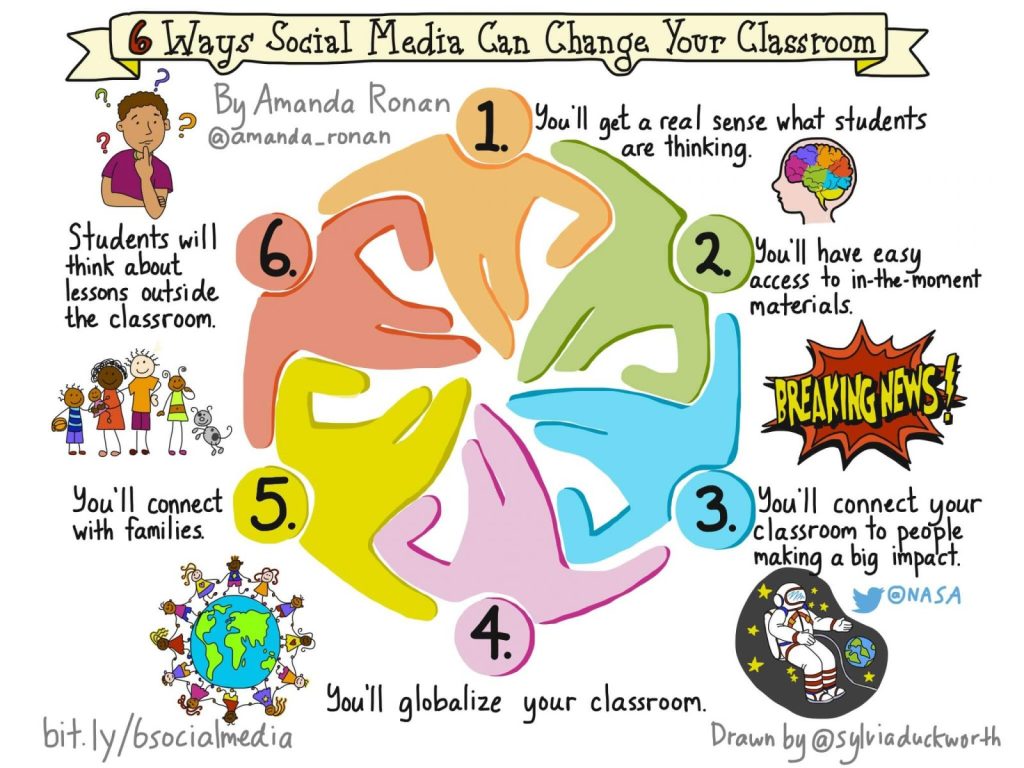
I confirmed to myself the transformational power that social media has. No longer are students expected to get all their information from a textbook and take that as fact. I love when my students challenge an idea, It allows for a dialogue to happen. With social media, my students are able to explore ideas in context and further their thinking. A classroom that I am in quite often is doing their first inquiry projects, students who aren’t typically engaged in the class work are happy working on their ideas. Ideas that they picked and that they wanted to explore. One of them wanted to do a project on music, so they are doing work on Reggae and exploring what life was like for Bob Marley. They are able to understand the music on a deeper level because they understand more in context.
Something I learned was how to help explain the benefits of social media. Not all parents will be on board and I do think it is important to present information to the parents about the benefits of using social media. As Jennifer Casa-Todd points out, many of the issues around getting parental consent are based on generational issues and misunderstanding how social media is used in the classroom. It is important to hear where the parents are coming from, and to reflectively listen to their concerns.
Social media is her to stay, it has given us tools to connect globally in a way that was unthinkable a few generations ago. With this, comes the responsibility to teach our students how to lead online. Social LEADia gives a base understanding of what we can do as teachers. I will be reading the entire book soon, to see what other knowledge I can glean from the author.
References:
Casa-Todd, J. (2017). Social LEADia: moving students from digital citizenship to digital leadership. San Diego, CA: Dave Burgess Consulting. doi: February 7, 202
The topic of inclusion and special education is a conversation that has been at the forefront of education for the last few decades. In today’s diverse classroom it is of the utmost importance that all students’ educational needs are being met. This is a seemingly endless task of balancing emotional, behavioural and learning needs. The conversation around inclusion does not end in the physical classroom. It is just as, if not more important that students with exceptional needs who are educated through distributed courses have tools for differentiation. Parents who are educating their children at home may not have any education training, so it is the teachers responsibility to create a classroom that facilitates engagement and differentiation of learning. That leads to the question, how does one support diverse learning needs in a distributed course?
Supporting diverse learners is the ultimate goal of most teachers. The sheer number of articles on this topic indicate the importance that is placed on its role in education. InA conceptual framework for building UDL in a special education distance education course the focus is on the tools that teachers need in order to be able to teach the diverse learners online. The article lays out some ways to quickly and effectively create an inclusive learning space. Secondly, inclusive distance education of children with disabilities of different types is a strong emphasis in this article. Journal of Pharmaceutical Sciences and Research, explore the role of arts education in distance education and the impact that arts have across a broad spectrum of disorders. The recommendations change based on the type of disability as well as the severity. The Handbook of research on classroom diversity and inclusive education practice is a wealth of practical and informational chapters on inclusion. In effective social media use in online writing classes through universal design for learning (UDL) principles, the role of UDL in the classroom, and online settings is looked at. The way that the internet is created and utilized becomes an important part of the learning process. While it is not targeted at online inclusion, there are many areas that can be crossed over between the online and physical classroom. In particular, chapter 15 explores bibliotherapy ( therapeutic use of books) as a way to help students increase their socio-emotional skills.
Socio-emotional skills are one of many areas that can be a challenge for students with exceptionalities. As Shechtman & Silektor, (2012) mention in their work, gifted children often struggle with empathy for peers who are less adept academically, reading facial expression and vocal tone can present a challenge for students on the Autism spectrum. Bibliotherapy may not seem like something that can be done, or should be done in a distance setting. However, using books to teach a lesson is something that can be relatively easily adapted to use in distance courses. This could be done in a variety of ways as,” individualized decision making and individualized instruction are at the center of special education practice” Scott & Temple, 2017 p.3. This list is by no means exhaustive but, the teacher could have a video of themselves reading the book and leading focus questions. The students could use a video conferencing app, such as bluejeans, to explore what the story means to them personally. The students could have a copy of the book that they read themselves. The way that they respond to the questions is another easy adaptation that supports inclusion. Having the students respond with an audio or video clip means that students who struggle with writing don’t have that barrier to their assessment. The same with a student who has a speech delay, they can respond with a written response, or some other means that works for them.
Having many modes of representation is not a new topic or concept for teachers, The universal design for learning (UDL) framework, encourages teachers to take a look at their goals and design options that will work for all their learners. This does not mean telling all students that they have to do everything the same, but rather allowing some freedom of choice within the assignments.“UDL in the technical communication classroom offers a flexible approach to accessibility that can meet both disabled and nondisabled users’ needs, and therefore is different from an approach that might think mainly about accommodations for disabled students’ needs” (Vie, 2018). In a distributed education course, this may mean that the students are given a choice on how to complete an assignment (as listed above) or that they are given choice in what assignments that they do. Jess Mitchell( bluejeans presentation, 2019) makes a very important distinction between UDL and Inclusive design, essentially UDL makes the technology as accessible for as many people as possible. Where as inclusive design makes the learning adapted for one specific person with whatever their needs are. This means that the learning or tool is created in a way that it does not take into account all of the potential needs, but rather is hyperfocused on what will help an individual learner be successful. It is important to remember that all disabilities exist on a spectrum of severity and of context.So while UDL is great, it may be even greater when combined with inclusive tools.
Art has been associated with therapy for decades, but yet, in schools, art education programs are often neglected at the expense of the core academic areas. For many students, art is their safe place for self expression and creativity. In a distance class, having room for creative expression is incredibly important. “Organized access to computer technologies opens great prospects for improving the way of life and leisure of disabled people by means of artistic and aesthetic activity in the conditions of home spare activities”.(Anufriev et al, 2018, p. 866). Having art as a part of a distributed course only adds to the value for the learner with exceptionalities as it does for a learner in a physical classroom. The inclusion of art may seem challenging to some teachers, but it does not need to be. Learning to understand the tones in music, drama activities, painting and drawing are all disciplines within art that can be adapted to teaching online. It is important that the art offered is not impacted by the students’ exceptionalities, this is again where the importance of UDL is highlighted. Anufriev reminds the reader that, “Respectively, it is necessary to think out the equivalents of the acoustic impact in the form of visual information, which provides minimal loss of educational content for students with hearing impairment .”(2018 p. 856)
When designing a course that has high engagement for the learner, it is important to think about all of the courses that they will, or are taking. Having a “standardized online course structures (e.g., navigational layout, arrangement of materials and information, and communication tools) help reduce students’ and faculty learning curve and increases efficiency in online learning.” (Scott and Temple, 2017 p.2). Creating a learning community with the other teachers and having a standard layout will only help to minimize the barriers to education and increase the success of the learner with or without exceptionalities. It reduces frustration and allows for confidence to be built more rapidly.
The rapidly changing modern classroom is incredibly diverse. With the increase of digital technologies it is increasingly possible for students with exceptional learning needs to receive a rich educational experience without being in a physical classroom. The tools needed to foster this environment online are not incredibly different for the tools needed to create a similar environment in any other classroom. Using social stories to create a bibliotherapy helps students to develop socio-emotional skills. Allowing the students to have some ownership and choice over their work helps to create students that are able to showcase their knowledge and be engaged in the content. Including diverse art modes in their education helps to foster creative thinking and expand their horizons. Finally, creating a standard template for their work across all courses reduces frustration and time spent learning the platform, allowing the student to focus on the content. As Skočić et al state. “ Inclusive educational policies require teaching that is adjusted to meet the diverse range of learners in classrooms providing curriculum adaptation and differential teaching to address the individualized educational needs of all students”
This post was supported by the fabulous members of my learning pod. It makes such a difference in education when you have a group to bounce ideas off of and who are so happy to read through work to make suggestions. Correct punctuation can be a challenge for me. Having friends to help point out changes makes a world of difference. Thanks Shelby and Ayesha!
References:
Anufriev, E. A., Meleshkina, E. A., Ivanova, E. U., Zimin, D. A., & Goltseva, O. S. (2018). Inclusive distance education of children with disabilities of different types. Journal of Pharmaceutical Sciences and Research, 10(4), 863-867.
Curran, C. M., & Petersen, A. J. (2017). Handbook of research on classroom diversity and inclusive education practice. Hershey, PA: IGI Global.
Mitchell, J. (2019, August 12) Bluejeans Conference with EDCI 335 class.
Scott, L., & Temple, P. (2017). A conceptual framework for building UDL in a special education distance education course. Journal of Educators Online, 14(1)
Shechtman, Z., & Silektor, A. (2012). Social competencies and difficulties of gifted children compared to nongifted peers. Roeper Review, 34(1), 63-72. doi:10.1080/02783193.2012.627555
Vie, S. (2018). Effective social media use in online writing classes through universal design for learning (UDL) principles. Computers and Composition, 49, 61-70. doi:10.1016/j.compcom.2018.05.005
The topic of inclusion and special education is a conversation that has been at the forefront of education for the last few decades. In today’s diverse classroom it is of the utmost importance that all students’ educational needs are being met. This is a seemingly endless task of balancing emotional, behavioural and learning needs. The conversation around inclusion does not end in the physical classroom. It is just as, if not more important that students with exceptional needs who are educated through distributed courses have tools for differentiation. Parents who are educating their children at home, may not have any education training, so it is the teachers responsibility to create a classroom that facilitates engagement and differentiation of learning. That leads to the question how does one support diverse learning needs in a distributed course?
Supporting diverse learners is the ultimate goal of many teachers, the number of articles on this topic support the importance that is placed on its role in education. InA conceptual framework for building UDL in a special education distance education course the focus is on the tools that teachers need in order to be able to teach the diverse learners online. This may seem like an odd choice to include in a topic on inclusion for diverse learners, but the article lays out some ways to quickly and effectively create an inclusive learning space. Secondly, Inclusive distance education of children with disabilities of different types. Journal of Pharmaceutical Sciences and Research, explore the role of arts education is distance education and the impact that arts have across a broad spectrum of disorders. The recommendations change based on the type of disability as well as the severity. The Handbook of research on classroom diversity and inclusive education practice is a wealth of practical and informational chapters on inclusion.In, Effective social media use in online writing classes through universal design for learning (UDL) principles, the role of UDL in classroom, and online settings is looked at. They way that the internet is created and utilized becomes an important part of the learning process. While it is not targeted an online inclusion, there are many areas that can be crossed over between the online and physical classroom. In particular, chapter 15 explores bibliotherapy as a way to help students increase their socio-emotional skills. In,
Socio-emotional skills are one of many areas that can be a challenge for students with exceptionalities. Gifted children often struggle with empathy for peers who are less adept academically, reading facial expression and vocal tone can present a challenge for students on the Autism spectrum. Bibliotherapy may not seem like something that can be done, or should be done in a distance setting. However, using books to teach a lesson is something that can be relatively easily adapted to use in distance courses. This could be done in a variety of ways as ,” individualized decision making and individualized instruction are at the center of special education practice” Page 3 jeo the teacher could have video of themselves reading the book and leading focus questions. The students could use a video conferencing app, such as bluejeans, to explore what the story means to them personally. The students could have a copy of the book that they read themselves. The way that they respond to the questions is another easy adaptation that supports inclusion. Having the students respond with an audio or video clip means that students who struggle with writing don’t have that barrier to their assessment. The same with a student who has a speech delay, they can respond with a written response, or some other means that works for them.
Having many modes of representation is not a new topic or concept for teachers, The Universal design for learning (UDL) framework, encourages teachers to take a look at their goals and design options that will work for all their learners. This does not mean telling all students that they have to do everything the same, but rather allowing some freedom of choice within the assignments.“UDL in the technical communication classroom offers a flexible approach to accessibility that can meet both disabled and nondisabled users’ needs, and therefore is different from an approach that might think mainly about accommodations for disabled students’ needs” (Vie, 2018). In a distributed education course, this may mean that the students are given a choice on how to complete an assignment( as listed above) or that they are given choice in what assignments that they do.
Art has been associated with therapy for decades, but yet, in schools art education programs are often neglected at the expense of the core academic areas. For many students, art is their safe place for self expression and creativity. In a distance class, having room for creative expression is incredibly important. “Organized access to computer technologies opens great prospects for improving the way of life and leisure of disabled people by means of artistic and aesthetic activity in the conditions of home spare activities”.(Anufriev et al, 2018, p. 866). Having art as a part of a distributed course only adds to the value for the learner with exceptionalities as it does for a learner in a physical classroom. The inclusion of art may seem challenging to some teachers, but it does not need to be. Learning to understand the tones in music, drama activities, painting and drawing are all disciplines within art that can be adapted to teaching online. It is important that the art offered is not impacted by the students’ exceptionalities, this is again where the importance of UDL is highlighted. Anufriev reminds the reader that, “Respectively, it is necessary to think out the equivalents of the acoustic impact in the form of visual information, which provides minimal loss of educational content for students with hearing impairment .”(2018.p. 856)
When designing a course that has high engagement for the learner, it is important to think about all of the courses that they will or are taking. Having a “standardized online course structures (e.g., navigational layout, arrangement of materials and information, and communication tools) help reduce students’ and faculty learning curve and increases efficiency in online learning.” (Scott and Temple, 2017 p.2) Creating a learning community with the other teachers and having a standard layout will only help to minimize the barriers to education and increase the success of the learner with or without exceptionalities. It reduces frustration and allows for confidence to be built more rapidly.
The rapidly changing modern classroom is incredible diverse. With the increase of digital technologies it is increasingly possible for students with exceptional learning needs to receive a rich educational experience without being in a physical classroom. The tools needed to foster this environment online are not incredibly different for the tools needed to create a similar environment in any other classroom. Using social stories to create a bibliotherapy helps students to develop socio-emotional skills. Allowing the students to have some ownership and choice over their work helps to create students that are able to showcase their knowledge and be engaged in the content. Including diverse art modes in their education helps to foster creative thinking and expand their horizons. Finally, creating a standard template for their work across all courses reduces frustration and time spent learning the platform, allowing the student to focus on the content. As Skočić et al state. “ Inclusive educational policies require teaching that is adjusted to meet the diverse range of learners in classrooms providing curriculum adaptation and differential teaching to address the individualized educational needs of all students” It does not mean that inclusive learning needs to reinvent the wheel.
The vast majority of our learning happens in social networks, whether they are digital or in person. Humans are social creatures and, as I talk about often in my posts, relationships are an important piece of the learning environment. Digital social networks and/or social media allow us as a population to engage with others in a way that was unthinkable only a few years ago. The idea that you can have a meaningful interaction with someone who lives on the other side of the world, via a box, is mindblowing. My generation and those who come after us accept this as normal. The significance of having “internet friends” is no more or less important than having friends who we know outside of the digital realm. When it comes to learning communities, it is relatively common now to have them online. I am in quite a few learning communities on Faceook and Reddit that are for teachers. The discourse in those groups allows the participants to learn from each other’s wisdom. Often there are book clubs that spring out of the collective desire to learn more, to develop professionally and to become better teachers. Some times these are facilitated by a leader; others happen organically. It is a wonderful opportunity to learn from teachers with varied experiences. Some are new, some teach in wealthy schools, some teach in other countries, some have been teaching for many years. It doesn’t matter; there is no pretense about who is better than who. There is a fundamental wish for the collaboration and input from other teachers. While I love social media and online learning, many teachers cannot access our groups for a myriad of reasons: “lack of social media readiness, poor infrastructure, poor cost effectiveness, low literacy rates, quality control issues, the exclusion of women, challenges with participation and engagement” (Carr et al, 2018). I think that this is a great example of some pitfalls of digital learning. It is an amazing tool for collaboration and learning and for learners to explore ideas that they might not be able to get in person. However, many learners cannot access even the most rudimentary of digital tools. This can create an intergenerational gap in access and further the divide between “rich and poor”. I do not think that this is an insurmountable barrier, and I do firmly believe that the benefits of social media as a learning tool mean that more learners need to have access to these tools. It is a manner of training, funding and access, which while simple in theory, are not necessarily easy gaps to overcome. As with the example of the wealth of teacher experience highlighted in the previous paragraph, social networks allow for a myriad of learners to engage with education in a way that they might not be able to otherwise. Social media in learning and digital learning encourage engagement for a section of the population who may otherwise face significant barriers to learning. This in turn allows for a less homogenous population and knowledge base in education, which only serves to create more well rounded learners. It is important that we create an environment in which students are able to understand the differences and similarities of life experience as these “can help today’s students, representatives of the Millennial generation, to connect with the instructor as well as with one another, and most importantly, can help students to realize the importance of understanding differences” Tsetsura (2011) p. 535 The modern learning environment is not a learning environment that is purely a pipeline from highschool to post secondary to a job that one will stay in for their entire lives. It is increasingly common that students will create their own jobs or work in an environment that does not currently necessarily exist. Having experience with classmates who have varied life experiences can only serve to create learners who are ready to adapt to the challenges that face the modern workers/workplace. Using social networks and social media allows our learners to develop a richer sense of the commonalities in life and how to facilitate for the differences.
References: Carr, A., Thamizoli, P., Rengalakshmi, R., & Balasubramanian, K. (2018). Learning through social media: A promethean gift? CSI Transactions on ICT, 6(3-4), 301-310. doi:10.1007/s40012-018-0211-2 Tsetsura, K. (2011). How understanding multidimensional diversity can benefit global public relations education. Public Relations Review, 37(5), 530-535. doi:10.1016/j.pubrev.2011.09.020
No experience in this world has ever been cathartic without the willing participation of the individual. Life does not automatically bestow wisdom or growth on anyone just for showing up. – Elizabeth Gilbert
In the first few days of EDCI 339 we were asked to pose a question around online classes. Mine centered on relationships, my pedagogy is focused on relationships with students so it made sense for me to ask that. Over the course of EDCI 339 I have seen the importance and wonderful facilitation of relationship centered online learning. When reading Hegarty’s article on online pedagogy I was struck in particular by the importance of Attribute one, “ participatory technologies”. In essence In order to have an open learning environment the learner must participate. It seems simple enough in theory, but forcing participation is never that simple. Sure students may submit their work in an online platform , but is that really participating in open learning?
In my many years of being in post secondary, I have taken a number of distance ed classes through a number of well respected institutions. Some have used participatory technologies better than others. I have been in synchronous and asynchronous classes, I have been in classes that were fully open and ones that had closed registration. It doesn’t seem to matter the modality, so much as the way that the learner was encouraged to participate. The ones that have stuck with me, are the ones that I was a) passionate about and b) engaged in. It seems to me that the peer relationships and personal engagement in the class are the most important to learner success. Obviously, I have a bias towards relationships in the classroom.
I don’t believe that it is just the participation that fosters success thought, I believe that the participation works to foster a collective who support each other. Through that, it is possible to push the learner past what is comfortable and safe into learning that is daring and exciting. I think about how to bring this into an elementary distance class, is is not enough to just have the students complete work and submit it. They are missing a piece that allows them to push their learning and challenge it. To grow from the collective understanding and use that to further their own understanding.
I will take this with me and ponder over the next few weeks. How do I, as an elementary classroom teacher, encourage group participation in a distance class?
Social media allows us as a population to engage with others in a way that was unthinkable only a few years ago. The thought that you can have a meaningful interaction with someone who lives on the other side of the world, via a box is mindblowing. My generation and those who come after us, accept this as normal. The significance of having “internet friends” is no more or less than having friends who we know outside of the digital realm.
When is comes to learning communities, it is relatively common to have them online. I am in quite a few learning communities on facebook and reddit that are for teachers. The platform allows for the participants to learn from each others wisdom and grow. Often there are book clubs that spring out of the collective desire to learn more, to develop professionally and to become a better teacher. Some times these are facilitated by a leader, others happen organically. It is a wonderful opportunity to learn from teachers with varied experiences. Some are new, some teach in wealthy schools, some teach in other countries some have been teaching for many years. It doesn’t matter, there is no pretense about who is better than who. This is wonderful.however many teachers cannot access our groups for a myriad of reasons. “lack of social media readiness, poor infrastructure, poor cost effectiveness, low literacy rates, quality control issues, the exclusion of women, challenges with participation and engagement” (Carr et all, 2018). I think that this is a great example of the pitfalls of digital learning. It is an amazing tool for collaboration and learning. For learners to explore ideas that they might not be able to get in person. However, many learners cannot access even the most rudimentary of digital tools. This can create an intergenerational gap in access and further the divide between rich and poor.
I do not think that this is an insurmountable barrier, and I do firmly believe that the benefits of social media as a learning tool mean that more learners need to have access to these tools. It is just a manner of training, funding and access which are no simple feats.
References:
Carr, A., Thamizoli, P., Rengalakshmi, R., & Balasubramanian, K. (2018). Learning through social media: A promethean gift? CSI Transactions on ICT, 6(3-4), 301-310. doi:10.1007/s40012-018-0211-2

 Dominique's Drivel
.jpg)